

Super User
Monday, 17 October 2022 09:49
Ukraine

Peculiarities of the enforcement system during the invasion of Ukraine
A report direct from our Partner based in Kiev - Ivan Zhabotynskyi Lawyer and private bailiff.
After Russia's military invasion of Ukraine on 24 February 2022, all spheres of life collapsed. The enforcement system was no exception. Fearing unwarranted tampering with databases, in the early days of the war, the Ukrainian Ministry of Justice disconnected bailiffs from all electronic databases.
State bailiffs received access to the electronic databases in April 2022. In June 2022, the Ministry of Justice started the process of connecting private bailiffs. At the beginning of October 2022, 85% (236 out of 279) of the private bailiffs had already returned to work.
Naturally, the enforcement process has also changed no surprise there. Several measures have been introduced for the duration of martial law, however, the most significant among them being the following:
• deductions from the wages, pensions and other income of debtors have ceased
• debtors have unblocked bank cards for debts of up to 100,000 hryvnias (approximately 2,800 Euros
• it is forbidden to execute notary writs (previously a very common document
• The Ukrainian Ministry of Justice has gained more control over private bailiffs
In general, it can be said that the enforcement system in most parts of Ukraine is functioning normally. In the regions occupied by the Russian Federation or where there are active combat actions, unfortunately, it is impossible to enforce the decisions.
The partner of European Collection and Enforcement Network CONNEXX - Ivan Zhabotynskyi can assist with the enforcement of a foreign decision in Ukraine. His office is in Kyiv.
Published in
News
Tagged under
Saturday, 06 March 2021 07:40
Collecting Debts in Ireland

Creditors are encouraged to secure their position by engaging with Debtors at an early stage. A brief overview from our partner Matthew Wales of Wales and Co Debt Collection Solicitors.
COVID 19 - DEBT COLLECTION BRIEFING – UPDATED
SOUTHERN IRELAND 16th FEBRUARY 2020.
It is abundantly clear that as a result of Covid 19 that there will be considerable difficulties in collecting debt. What is the best strategy to maximise your collections?
STEP 1 – ENGAGE WITH DEBTOR- PAYMENT ARRANGEMENTS AND TAKING SECURITY.
It is fatal for a creditor to fail to act in the hope that the current economic situation will improve in the short term. It is very important that the creditor seeks to engage with the debtor. There can be reluctance for a creditor to engage with a debtor during the Covid 19 pandemic but our experience is that the majority of debtors are willing to engage constructively with their creditors to reach an agreement. Please remember that your company needs cash flow to survive. In the current circumstances mediation and amicable settlement are preferable to litigation if at all possible. In this regard, at initial stages, threatening legal action when seeking to collect a debt is not helpful and should be avoided when contact is made with the debtor as the debtor may simply refuse to engage with you.
Communication with the debtor will allow you to differentiate between those debtors who are genuinely facing financial difficulties and to work with them and those debtors who are simply avoiding making payment to you potentially using Covid 19 as an excuse. In cases of an inability to pay due to Covid 19 it is reasonable to request a third party professional to supply evidence of the debtors inability to pay.
If a payment arrangement is entered into that arrangement should be monitored in case a different approach is required towards collection, should the debtors circumstances change. It is important that if possible creditors seek to gain a written admission of the due debt and a written repayment proposal of the debt is an admission of liability and will minimise any expensive legal disputes in relation to liability and will greatly simplify the legal process should that need to be employed.
In your discussions with your creditor you could also consider seeking to obtain some form of security from the debtor for the debt such as a personal guarantee or a charge over property. If you have a retention of title clause in your contract with your debtor, title to the goods does not pass until payment has been made so you may wish to enforce the retention of title clause and obtain return of your goods.
We would recommend you contact your Solicitor to discuss security issues to ensure that the security obtained/ or offered is capable of being enforced legally. If you decide because you have been given security to provide a moratorium on legal action to your creditor, ensure the security that is obtained will survive any insolvency of the debtor in the future .
If it has not proven possible to reach an accommodation with your debtor then you should discuss with your Solicitor the possibility of proceeding to step 2
STEP 2 – SEND DEMAND LETTER
The demand letter should be tailored to the particular circumstances of the debtor. Tell your Solicitor what those circumstances are so that he can tailor the letter to maximise chances of collection. The demand letter does not have to be aggressive in tone and can simply serve as a reminder to the debtor that you are still willing to engage with the debtor but you will escalate the matter unless either payment is made or there is a written agreement to pay. This is a process of escalation which maximises your collection rates. If the debtor does not engage then a final demand letter should be sent by your Solicitor enclosing draft proceedings for issue unless the debt is paid or payment proposal made.
STEP 3- ISSUE OF COURT PROCEEDINGS
In Southern Ireland the Courts are open but operating at reduced capacity and there will be significant delays in Court processes into the future.. In this regard it is very important that the correct legal procedures are undertaken appropriate to your case to avoid getting your case subsumed into a system that could take months if not years to conclude. This is particularly of concern if the case is likely to be formally defended. If the proceeding issued are not defended then it is a relatively quick procedure months rather than years to obtain your judgment and to get it enforced. If there is no dispute to the debt then serious consideration should be given to using liquidation procedures. Serious consideration should be given to this process because it can avoid protracted “defended cases” as the process is quick even in the current pandemic and does not lend itself easily to an unmerited defence of your claim.
Prior to the pandemic the debt had to be over €10,000 for this process to be employed which has now recently been altered so that this process is only appropriate to debts that are €50,000.00 or above to give protection to debtor companies during the pandemic. The first step in this process is to serve a liquidation demand. To commence the process a document known as a statutory demand is served on the Debtor company personally at its registered office. The limited company has 21 days from the date of service in which to either pay the debt or dispute the debt. This stage of the process is not expensive. If the limited company takes neither option, a winding up petition can be issued and a liquidator is appointed to wind up the company.
The purpose of this process is to put maximum pressure on the debtor company to pay its creditor and it is highly effective in this regard because the consequences of being liquidated are obviously very serious. Apart from the fact that the company will no longer technically exist and will have to cease to trade there are consequences for the Directors of the company who may be restricted from remaining or becoming directors of any other company and there are financial implications for them in this regard. This is also relevant to where a creditor may seem to set up a “phoenix” company to void liability for the debt.
PLEASE CONTACT US
We hope this briefing note has been of assistance to you.
If you need assistance with debt collection in Ireland you are most welcome to contact Matthew Wales Solicitor by email or telephone 003531 2935110.
We would be pleased to discuss on an informal basis any issues you have with collection in Ireland or Europe wide through our Connexx network, with no obligation.
Published in
Blog
Tagged under
Monday, 15 February 2021 12:55
Spain

Jorge Castelló Gascó, Procurador de los Tribunales
Procuradores de los Tribunales are private professionals in Spain. To become Procuradores de los Tribunales we must prove we have a law degree; therefore, we have the same training as lawyers with a different specialism.
A particularly good example to understand our profession would be a comparison with family doctors and specialists. As Procuradores de los Tribunales, we have knowledge of all legal areas, but we are not specialists in any of them except for procedural law.
We are a unique profession in the world and take part in almost every Court proceeding assisting clients, lawyers, and Court. We are involved in the Court proceeding before the trial (helping to prepare all strategies and documents needed), during the trial, and after the judgment has been made.
How do we do that?
• Clients
◦ We do amicable collection before starting with court enforcement proceedings.
◦ We inform creditors of their options in Spain and provide, when necessary, a lawyer expert in the matter needed (we cooperate with hundreds of lawyers in Spain covering all legal areas).
◦ We represent them in all Court proceedings and make sure the Court proceeding is as fast as smooth as possible.
◦ We also can manage everything that is necessary for the client in relation to public administration.
• Lawyers
◦ Representing the client in court means we must work side by side with the lawyer organising the files and, when necessary, helping to choose the best defence strategy.
◦ We advise lawyers in relation to the rules that regulate the procedure and their particularities since, although the law of the specialty is fundamental, an error in the procedure can be very harmful to the interests of the client.
• Courts
◦ We also have a legal obligation to collaborate with the Courts, in such a way that, on a daily basis, we spend hours in the Courts reviewing files, speeding up procedures and correcting errors that slow down judicial procedures.
◦ Our collaboration with the Courts is carried out in such a way that we are the link between the judicial system, clients, and lawyers. We assume all communication between them.
Jorge Castelló Gascó, is the third generation of Procuradores de los Tribunales who have been part of the office located in Valencia. For this reason, he combines the accumulated experience of the firm together with the knowledge of the study of the most recent regulations.
We develop our activity throughout the Spanish territory under three fundamental premises: quality, efficiency and transparency.
For more information please do not hesitate to contact us on the following:
Tel. +34-96.391.86.61
Published in
Countries
Tagged under
Friday, 12 February 2021 11:19
New Regulation (EU) 2020/1784 – service in Europe
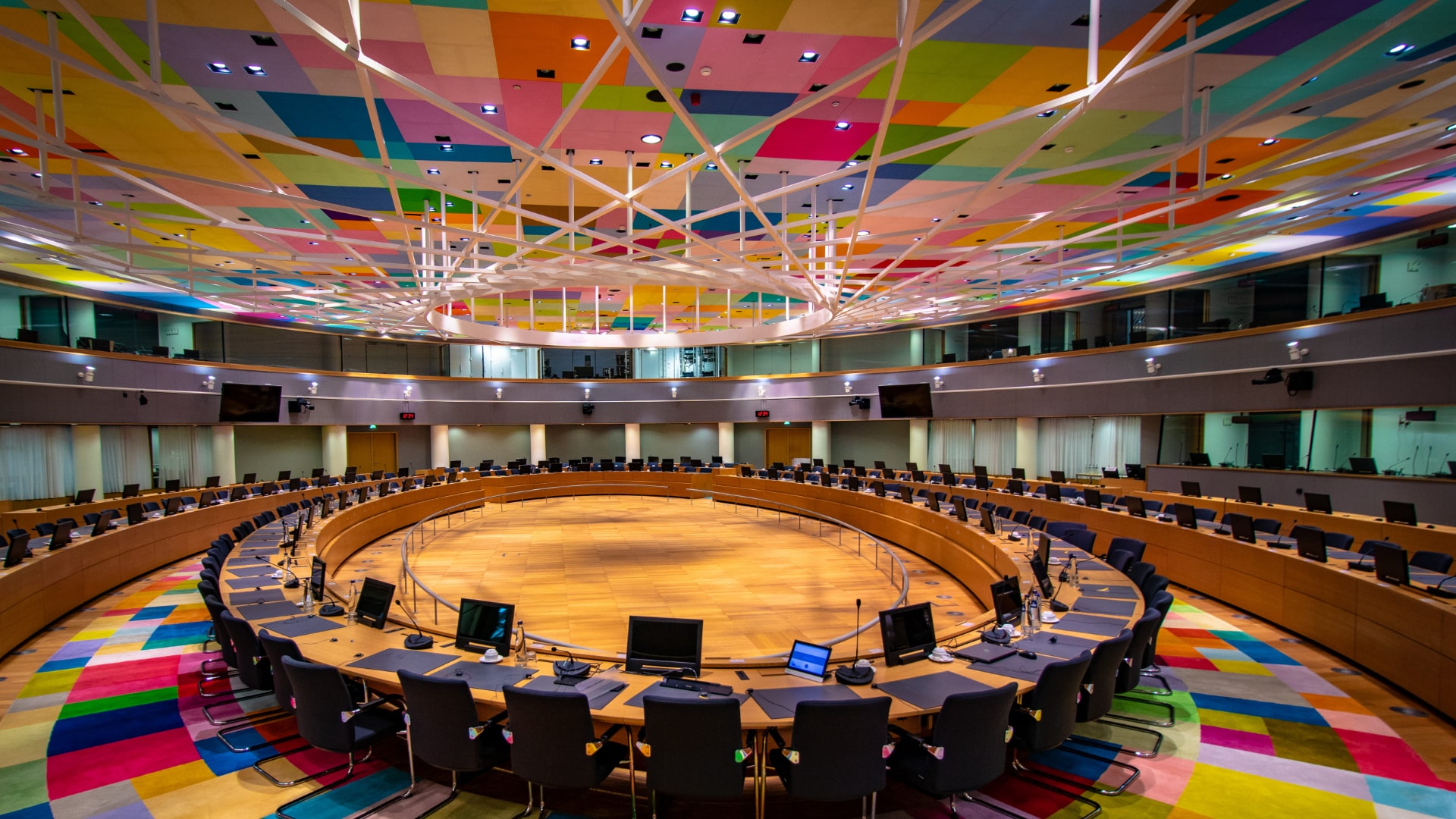
As Regulation (EC) 1393/2007 has been in force for more than ten years, it was time to make a much-needed change to amend and modernise the amendments of this widely used Regulation.
The Commission had already evaluated the current Service Regulation in 2017 and concluded that transmission could be made faster and simpler through modern means of communication and that the procedure could be more streamlined.
The publication of the new Regulation (EU) 2020/1784 of the European Parliament and of the Council of 25 November 2020 on the service in the Member States of judicial and extrajudicial documents in civil or commercial matters is a major step towards modernisation.
The major changes that the new Service Regulation introduces compared to the current Service Regulation are the e-CODEX; is the possibility of effecting service by electronic means; the possibility of signing documents, records and forms with electronic signatures; and, lastly, assistance in address enquiries.
The e-CODEX (E-Justice Communication via Online Data Exchange) is a decentralised information system consisting of national IT systems interconnected by a secure and reliable communication infrastructure that ensures users can send and receive records, documents and forms by electronic means. This is all from the perspective of effecting service of documents faster and more efficiently.
And there is also the option of serving a document directly by electronic means on an addressee with a known electronic address in another Member State. Through the existing Regulation (EU) No 910/2014, the respective national electronic signatures are also recognised on documents and records to be served.
Last but not least, each Member State in which a document is to be served must provide assistance in determining the addressee’s address. The aim of this measure is for service to be effected at its destination with greater legal certainty.
The new Service Regulation applies from 1 July 2022.
Published in
Blog
Tagged under
Wednesday, 13 November 2019 08:08
At the 18th General Assembly in Warsaw Connexx welcomes a new Partner
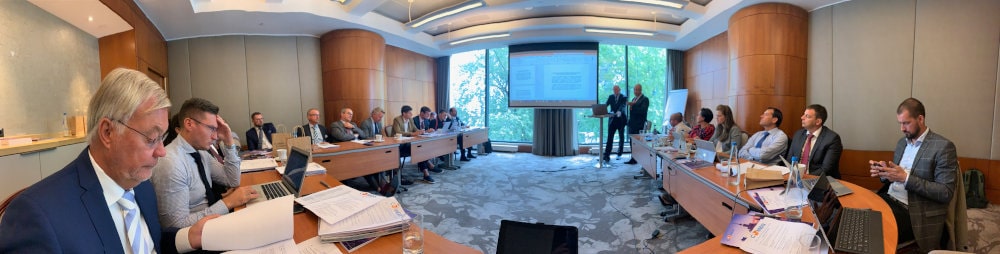
Warsaw, is vibrant, clean, and a safe city to visit. Our 18th General Assembly was well attended with many agenda items to discuss. The assembly was organised and arranged by our Polish partners Leszek Czarny and Wojciech Budny who are two of the partners in the law firm of Kancelaria Radców Prawnych who provide legal and debt collection services in English, Russian, Spanish, and of course Polish.
The General Assembly was over a two day period and held on September 19 – 20th 2019. One of the Highlights of the conference was the addition of our new partner Ivan Zhabotynskyі who, is a private enforcement officer with offices based in Kyiv Ukraine. Ivan gave an excellent presentation to the members regarding his length of office, and the functions of civil debt enforcement that he is able to provide.
It is very exciting for Ivan, being relatively new to the enforcement sector, as the Ukrainian government has recently decided to modernise enforcement throughout the country. Geographically is Ukraine is a large country to cover, however Ivan has relationships with other Judicial Officers in the more remote parts of the country. So any files sent to Ivan will always have his special attention.
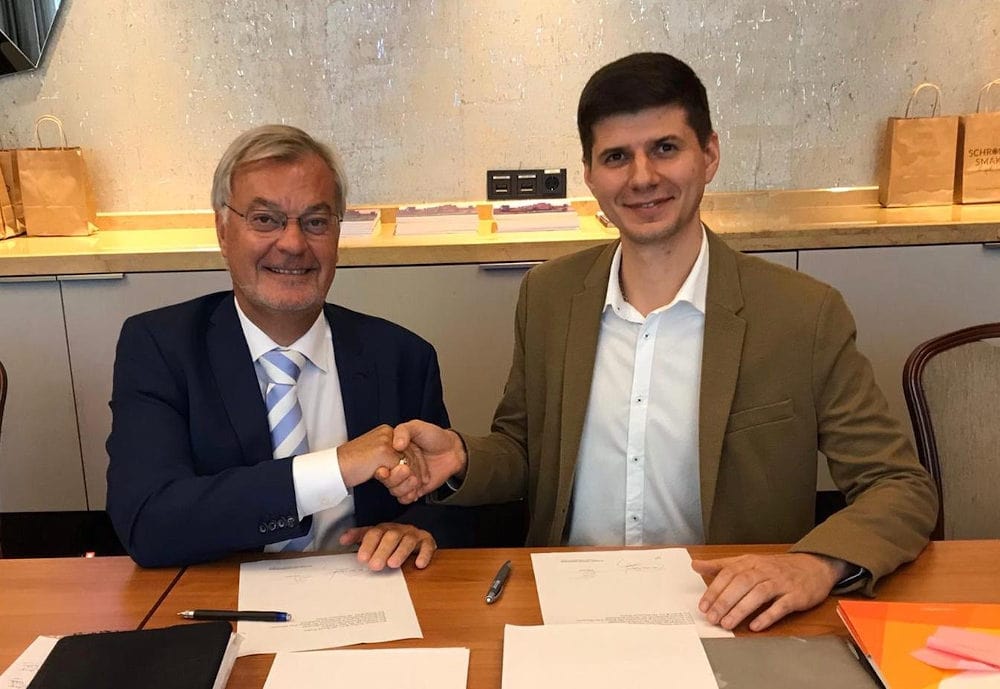
Following his presentation it was unanimously decided to admit Ivan as a full member. In the photo Ivan on the right has just signed the official documents of membership, with our President Alex Dockers.
Again this is very exciting for the Connexx Network as we branch out to eastern Europe. Many have asked is Ukraine in Europe or is it part of Russia? “Ukraine is a priority partner
within the Eastern Partnership and the European Neighbourhood Policy (ENP). ... The economic part of the Ukraine–European Union Association Agreement was signed on 27 June 2014 by the new President, Petro Poroshenko”.
The EU is seeking an increasingly close relationship with Ukraine, going beyond co-operation, to gradual economic integration and deepening of political co-operation. Link.
So I hope that is now clear. If you would like to find out more about the services of our new Ukrainian Partner please look up the country in the top tool bar of this website. Our next meeting will be held in the ancient and capital city of Athens Greece.
Published in
News
Tagged under
Tuesday, 12 November 2019 10:40
Connexx meets in Warsaw and appoints a new Board of Directors
What started as an idea, a concept in 2012 by Alex Dockers, became a reality. Alex, as a Judicial Officer based in Belgium, believed that there was an information gap in how other countries enforced judicial titles and how they undertook debt collection.
The other question was how to form a network where English is the second language and how to cooperate with other countries on the same level? These were the burning questions.
In South Africa the same year, the Union International Huisseir de Justice was holding its congress meeting. Alex made contact with like-minded Judicial Officers, and Martin Leyshon and David Walker, who were representing England, Wales, and Scotland, were invited to join in discussions.
Agreements were made, and the rest they say is history. Connexx now has a network of 18 partners in different countries throughout Europe.
At our last Connexx General Assembly in Warsaw, Poland, several changes were made, of which we would like to share with you, and new countries joined our network.
Alex Dockers stood down as the president after seven years of given the network much-needed direction, guidance, enthusiasm, and commitment. Alex, we thank you for everything you have done for our network, and even though you will now become a backbencher, we are sure that your contributions will continue to be invaluable.
We also would like to thank Adrian Bayh, who has also stood down from the board for his contribution over the years.
Martin Leyshon also stood down as the Vice President. Martin, however, remains on the board as its technical director. Martin said, "I am looking forward to working with our new president Damir Site and other new members of the board". "The challenge is to take the network to the next level now that the foundations are firmly in place".
To check out the new president and the board profiles, please see members of the board.
New additions – We welcome Morgan Matile from Switzerland and Geoffrey Galle from Luxemburg to the board.
Over the last three years, Connexx has welcomed new partners from:
Luxemburg
Switzerland
Greece
We wish to put on record our sincere thanks to our Partners in Poland for organizing our General Assembly and making it a great success. Sylvia, in particular, met everyone's expectations. Thank you once more.
Speaking of Greece its' the destination for our next Connexx meeting to which I'm sure all members are looking forward to attending.
Published in
News
Tagged under
Tuesday, 12 November 2019 08:51
Morgan Brand - Treasurer
 Morgan commenced his enforcement career in February 2009 as a Swiss appointed government bailiff in Switzerland’s 3rd largest debt collection office - the canton of Neuchâtel. He has ascended the ranks with an initial promotion in 2013 to the position of managing the seizure sector.
A second promotion followed in 2016 as the deputy office manager who was responsible for all of the cantons seizure sectors. A critical and responsible position in assisting the wheels of commerce to turn. In 2017 Morgan obtained the most important certification in the field of Swiss debt collection, that of a specialist in debt collection and bankruptcy with a Federal Diploma of Professional Education and Training.
In January 2018, he joined the Burkhalter & Associés team as a Swiss lawyer and was in charge of debt collection and the commercial proceedings throughout Switzerland. In June 2019, he became the managing partner of Burkhalter & Associés with the distinct ambition of expanding the firms' activities in Switzerland but also throughout Europe by joining the Connexx network.
Through the Connexx network and the professionalism of its members, jurisdictional borders are no longer an insurmountable barrier for people wishing to collect their unpaid debts where the debtor has moved to a different country. Being appointed as the treasurer of Connexx and the involvement within the Connexx committee is, therefore, not only a logical follow-up to the objectives set by Morgan but puts him at the very heart of the network.
Published in
Board Members Profiles
Tagged under
Monday, 11 November 2019 08:26
Geoffrey Gallé - Vice President
 I embarked on my enforcement career in June 2004 as an assistant judicial officer to the firm of ‘Funk & Biel’ based in Luxembourg. That was an excellent platform for me to study the profession.
In December 2006 I received my appointment as an Authorized Judicial Officer, and on the 1st January 2007 my partner and I formed the office of Biel & Gallé. I recall, we had four employees and servicing around 6,000 documents per year.
As of today, we have increased our staffing levels to 9 employees and serving around 12,000 documents per annum. Luxemburg is a small country with a first-class regulatory system that enables our firm to give a personal service to our clients, but also gives me the time to devote to my Connexx Board duties. My passion is for service delivery, family, carving, gardening, cooking, and discovering new wines.
Connexx, for me, is a network that has professional partners in 18 different countries, all undertaking the function of debt collection and the execution of judgments. Connexx covers the existing “Information Gap” on procedures, requirements, competencies, costs, from one country to another.
The fact that we know each other quite well and can communicate on the different procedures allows us to give the best advice to our clients.
I am looking forward to the challenge ahead in my new role as Vice – President and promoting further an already robust network.
Published in
Board Members Profiles
Tagged under
Friday, 08 November 2019 09:00
Ukraine
DEBT COLLECTION IN UKRAINE
There is a mixed system to enforce judgments in the country of Ukraine. In 2017 the enforcement sector changed dramatically which now gives an option to collect your debts either through - Ukraine’s state enforcement officers or via private enforcement officers (private sector). Today, private enforcement officers are recognized to be more effective than state enforcement officers. Why? The main reason for this, is that a private enforcement officer is motivated to enforce a judgment. The officers livelihood would depend on it. Private enforcement officers, such as our firm, care about our clients and liaise with them throughout the process.
Private Enforcement Officer Ivan Zhabotynskyі
Ivan Zhabotynskyі is among those who became a private enforcement officer in Ukraine from the very outset. The office of a private enforcement officer applies all possible legal measures to enforce a judgment. We can undertake a number of legal actions on the Creditors behalf when enforcing the judgment, such as, seizure or arrest of property, search of a debtor or their assets, claiming debtor’s property from third parties, and even initiating a restriction of a debtor travelling abroad. As you can see the Ukraining enforcement system is very robust than in many other countries, therefore increasing your chances of success.
Ivan Zhabotynskyі, along with his assistants, is fluent in English and can consult with you on most legal issues related to enforcement proceedings. If a client would need to obtain court permission to enforce a foreign judgment in Ukraine, protect its violated rights in Ukrainian jurisdiction or simply obtain a qualified legal aid, Ivan Zhabotynskyі can recommend experienced and skilled lawyers.
As a matter of the legislation, there are two types of enforcement fees a private enforcement officer may charge. A primary enforcement fee is a compulsory one and charged to a debtor at the rate of 10 % of the sum collected from the debtor. The other one is an additional enforcement fee, which is not compulsory. The additional enforcement fee is paid by a client if there are certain agreements made between the officer and the client. Usually, our office through our enforcement officer Ivan Zhabotynskyі enforces judgments for the primary enforcement fee only. If we undertake a number of additional enforcement actions to collect your debt from the debtor an additional enforcement fee may required, however this is handled and negotiated on a case by case basis. To cooperate with our private enforcement officer Ivan Zhabotynskyі, a client must apply for the commencement of enforcement proceedings, in other words file a writ of enforcement and conclude an agreement relating to an additional enforcement fee, if necessary.
Procedure of Foreign Judgments in Ukraine
A foreign judgment or an arbitral award may be enforced in Ukraine only after a Ukrainian court permits its enforcement.
For this, a party seeking to enforce a foreign judgment or an arbitral award must file a motion with the court. The motion must be filed within three years of the date for such a judgment or award to have the legal effect.
Should you wish to discuss any debt matter you can either look at our website or send us an email.
You can find more information at our website: enf.com.ua
Email:
Tel No+38 044 501 31 30
Tel No+38 095 501 31 30
Address - st. Bohdan Khmelnytsky, 17 / 52A, 6th floor, of. 610
Kyiv, 01030
Published in
Countries
Tagged under
Tuesday, 16 April 2013 18:14
Luxembourg

Enforcement of a judgment in the Grand Duchy of Luxembourg.
Written by the president of Connexx – Our partner in Luxemburg – Geoffrey Gallé
The judicial officer is the only ministerial officer authorised to enforce a judgment within the territory of the Grand Duchy of Luxembourg.
Things to note: In Luxembourg, there are several jurisdictions-
Therefore, judgments from the following are available for enforcement
• the Justices of the Peace of Luxembourg, Esch/Alzette or Diekirch
• the two District Courts of Luxembourg and Diekirch
The different matters include civil, commercial, correctional, labour law, lease, summary proceedings, garnishment of bank accounts.
These judgments will either be notified through the clerk's office or served through the bailiff responsible for collecting the debt, depending on the identity of the matter relating to the judgment.
Once the time limits for appeal have expired and the judgment has become res judicata, (the principle that a cause of action may not be relitigated once it has been judged on the merits) enforcement measures can begin.
In the event that the sentence of the judgment mentions provisional execution, it goes without saying that the start of the execution will be immediate.
To this end, the bailiff has a full range of acts and procedures at his disposal, such as:
- the order before seizure and execution
- seizure of goods (on furniture, cars, paintings, various objects
- garnishment on bank account(s)
- special garnishment on wages, annuity, pension
- seizure of real estate
- registration of a judicial mortgage as a precautionary measure
- the notice of affixation of placards
- summons to attend the forced sale
- the forced sale
The costs incurred will be borne by the debtor party, except of course if the latter is clearly insolvent, both materially and financially. In this is the case, the creditor will have to bear the responsibility for the costs.
The judicial officer will therefore do his utmost to recover his client's debt, while acting as a neutral party in terms of costs, respect for the debtor and ethical enforcement.
Whilst Luxemburg is one of the smallest countries in Europe with a population of 650,000 people, it is a developed country with an advanced economy with one of the world’s highest GDP per capita.
We at Biel and Gallé are a small office offering a personal touch to all our clients. Instruct us today and increase your chances of recovering what is due and payable.
Address: 1, rue Nicolas Simmer, L-2538 Luxembourg
Post box: B.P.1262 L-1012 Luxembourg
Web address: www.huissiers.lu
Phone: + 352 26 02 11 1
Fax: +352 45 8041
Published in
Countries
Tagged under
